

Print piece
Parent brochure, tri-fold
Three pages: a cover letter for the doctor, then the outside and inside of the tri-fold. The outside sheet reads tuck flap, back cover, front cover, which is the order a standard letter fold needs. Dashed lines mark the folds and do not print.

For the practice
Printing the parent brochure
The next two pages are a tri-fold handout for parents about zirconia and stainless steel crowns. You are welcome to print it for your practice. Here is everything a print shop needs to hear.
What to tell the print shop
- Pages
- The PDF has three pages. This letter is page 1 and is not part of the brochure. Page 2 is the outside and page 3 is the inside; print those two only.
- Size
- 11 x 8.5 inches, landscape.
- Sides
- Double-sided, flipped on the SHORT edge. This is the one to say out loud: flipping on the long edge prints the inside upside down.
- Fold
- Standard tri-fold, also called a letter fold. The panel with the child's photo ends up on the front.
- Paper
- 100 lb text weight. Matte or silk reads better than gloss under operatory lighting.
- Color
- Full color, both sides. Ask them to keep the color to the edge.
Where to take it
Any local print shop can do this, as can the print counters at FedEx Office, Staples, or a UPS Store. Send the PDF as-is. A local printer will usually beat the chains on price at a few hundred copies and will fold them for you.
Printing it in the office
It works on an office printer too. Print pages 2 and 3 only, landscape, at scale 100% (not "fit to page", which shrinks the panels and throws off the folds), two-sided and flipped on the short edge. Then fold in thirds.
Add your practice before you print
The inside panel has a blank space for your practice name and phone number. Parents call their own office, not ours, so either write it in or ask us and we will set your details into the file before you send it to the printer.
The brochure carries general information about the crowns themselves. It is not dental advice and does not replace what you tell your patients. Some sections are marked for your clinical team to complete before the piece is handed out.
KTR Crowns, 8515 Edna Ave, Ste 250, Las Vegas, NV 89117 · ktrcrowns.com
Your dental practice
Practice name
Phone
Questions to bring with you
Write down anything you want to ask. No question is too small.
If a question comes up after you get home, call the dental office. They would rather hear from you than have you wonder.
About these crowns
KTR makes pediatric dental crowns for practices across the country. Your dentist chose the crown for your child. This handout explains what it is and what it is made of.
Who decides which crown?
Your dentist does, based on which tooth it is, how much of it is left, and how your child bites. Ask them why they chose the one they did. It is a fair question.
General information about the crowns themselves, from the manufacturer. It is not dental advice and does not replace what your child's dentist tells you.
KTR Crowns, 8515 Edna Ave, Ste 250
Las Vegas, NV 89117 · ktrcrowns.com

For parents and caregivers
Your child is getting a crown
A short guide to what a crown is, the two kinds your dentist can use, and what to expect afterwards.
Open for the full guide
What is a dental crown?
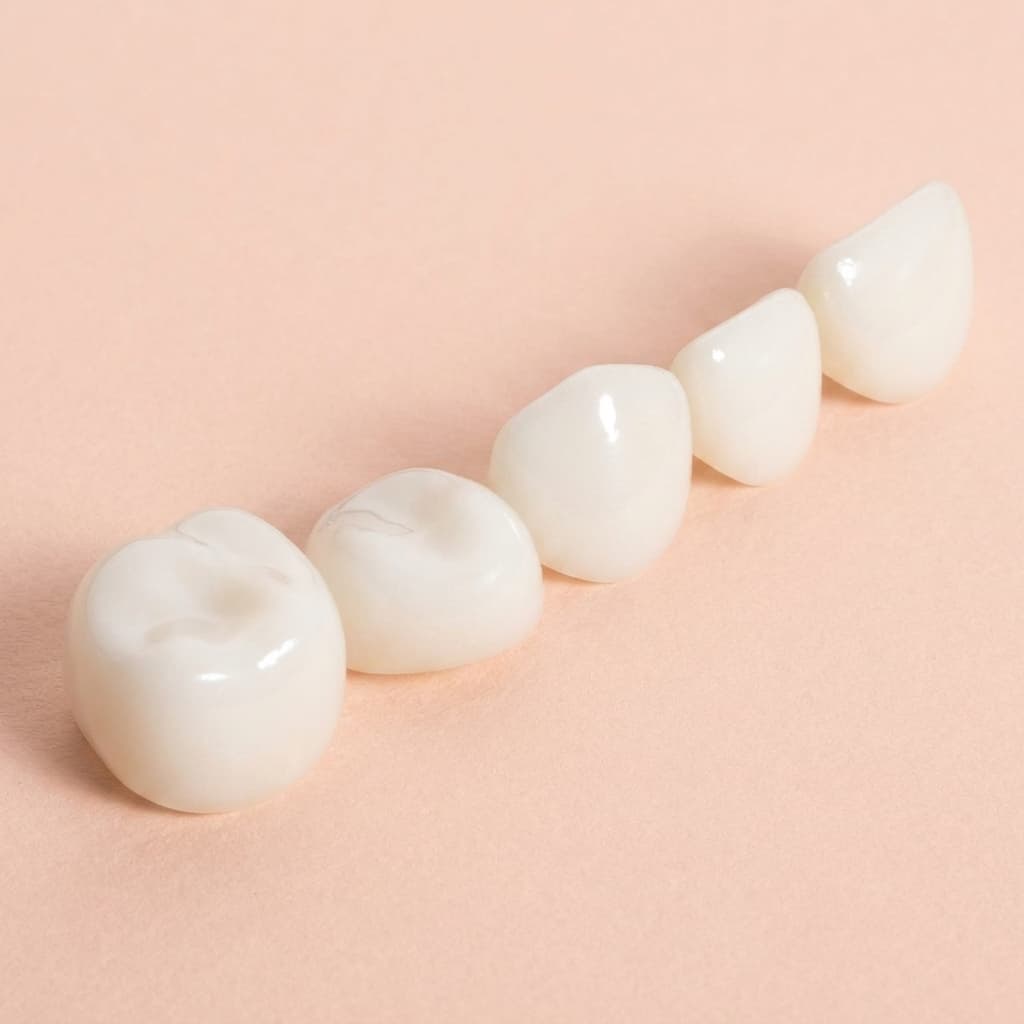
A crown is a cover that fits over the whole tooth. It is not a patch on one small spot. It wraps the tooth on every side and protects it.
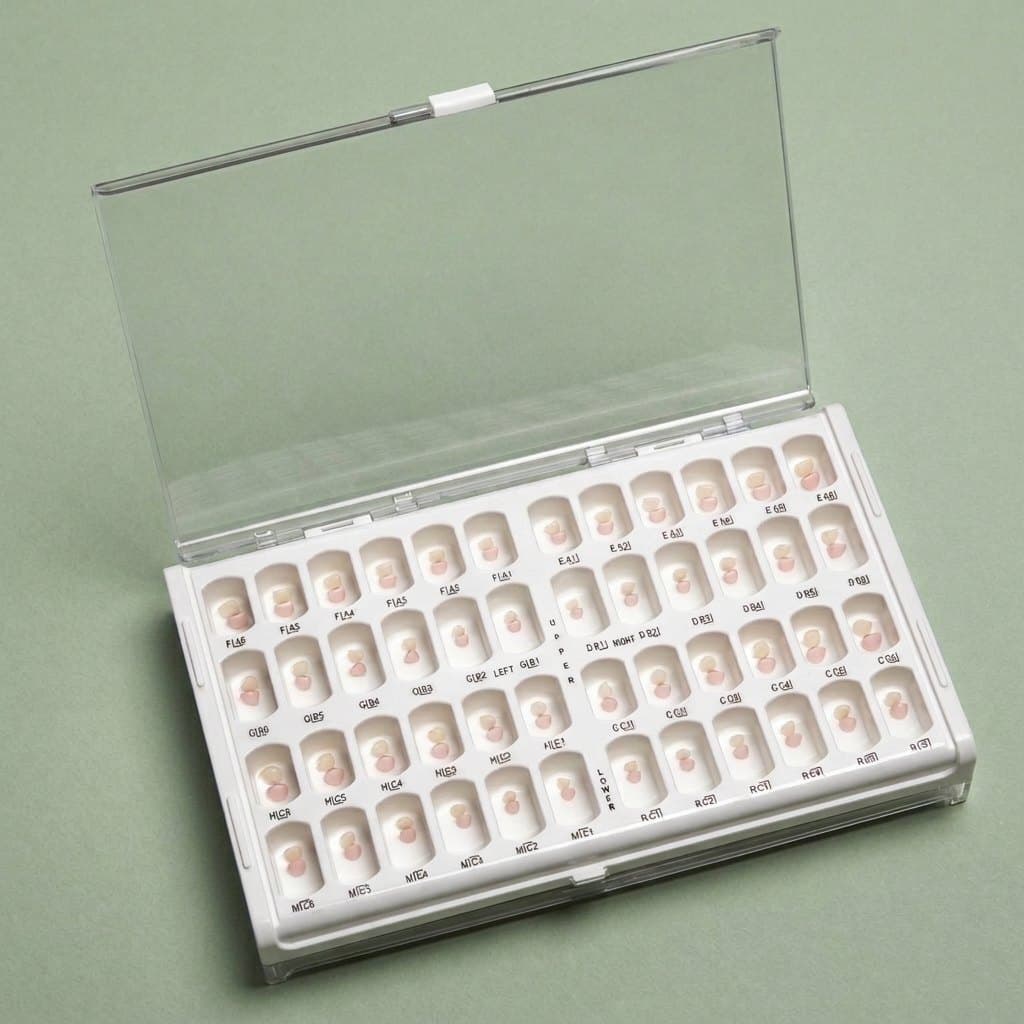
Crowns are made ahead of time in many shapes and sizes. Your dentist measures the tooth, picks the crown that matches, shapes the tooth so the crown sits flush, then cements it in place.
A well-fitted crown copies the natural tooth: the same room in the arch, the same contact with the teeth beside it, and the same bite against the teeth above or below.
Two words you may hear
Primary teeth
Your child's first set of teeth, or baby teeth.
Primary molars
The wide baby teeth at the back of the mouth, used for chewing.
Why does my child need one?
A filling repairs one part of a tooth, while a crown covers and protects the entire tooth. Dentists may recommend a crown when decay is large, affects more than one side of the tooth, or when the tooth has received nerve treatment.
Baby teeth are small, so when a large amount of decay is removed, there may not be enough strong tooth structure left to reliably support a filling. Even if a large filling can be placed, the remaining tooth around it may be weakened and more likely to crack, break, or collapse under normal chewing forces.
That's why, after extensive decay or a large restoration, covering the tooth with a crown is a common treatment option. A crown surrounds and protects the remaining tooth structure, helping reduce the risk of the tooth breaking and allowing it to continue functioning until it naturally falls out and the permanent tooth is ready to erupt.
Research has found that crowns on primary molars can last longer and require less follow-up treatment than large, multi-surface fillings in appropriate cases. Because a crown covers the entire tooth, it can also help protect the remaining tooth structure from further damage and recurrent decay. When a crown is recommended, tooth-colored options may be available for families who prefer a more natural-looking restoration.
Why protect a baby tooth if it will eventually fall out?
Baby teeth have important jobs. They help your child chew comfortably, speak clearly, and maintain the proper space and pathway for the permanent teeth developing underneath. Keeping a baby tooth healthy and functional until it is naturally ready to fall out can help support your child's oral health and development.
The two kinds of crowns
Both are strong and both are made for children. The everyday difference is what they are made of and what they look like.
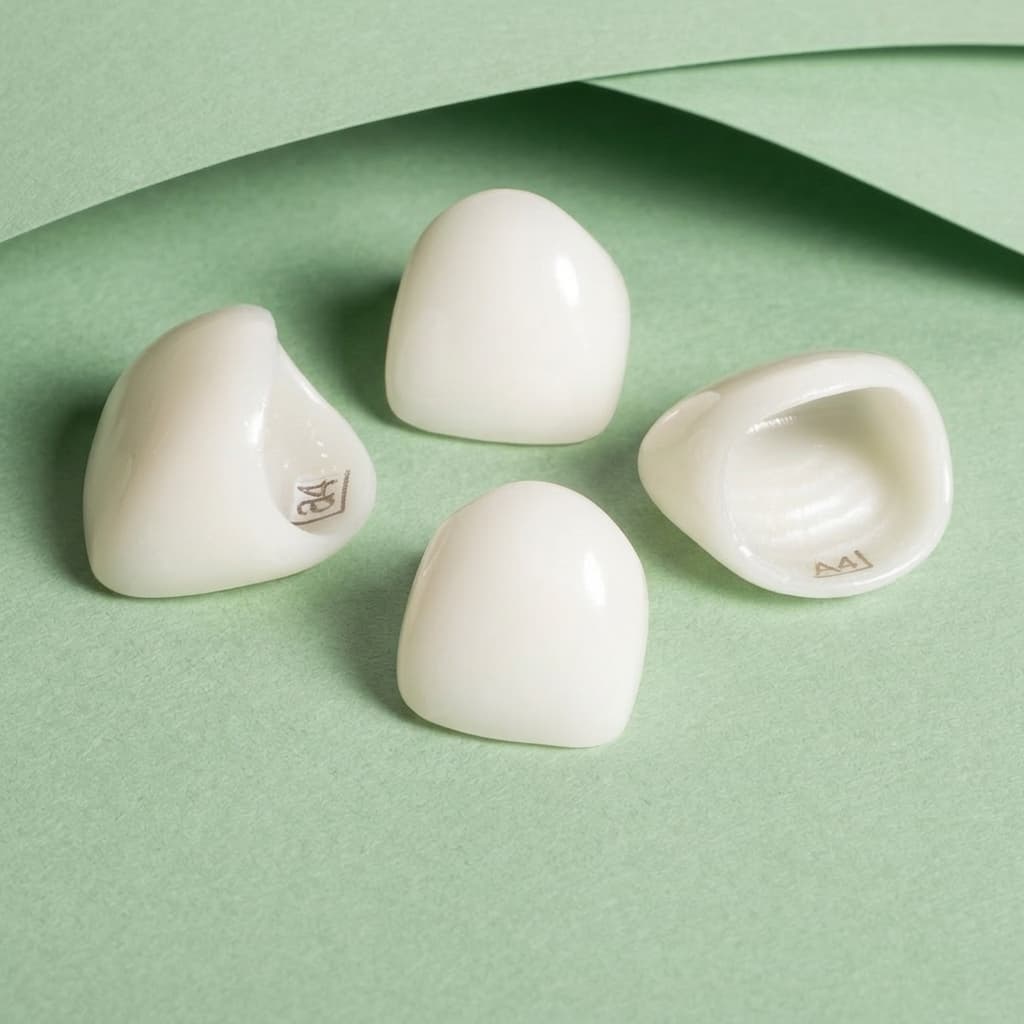
Option one
Tooth-colored zirconia
- White ceramic, no metal at all, so it blends in with the teeth around it.
- It will not stain or discolor over time.
- Metal-free and biocompatible, which lowers the chance of a reaction.
- Computer-cut from high-strength zirconia rated at 1200 MPa.
- Smooth and polished, which helps keep plaque from building up.
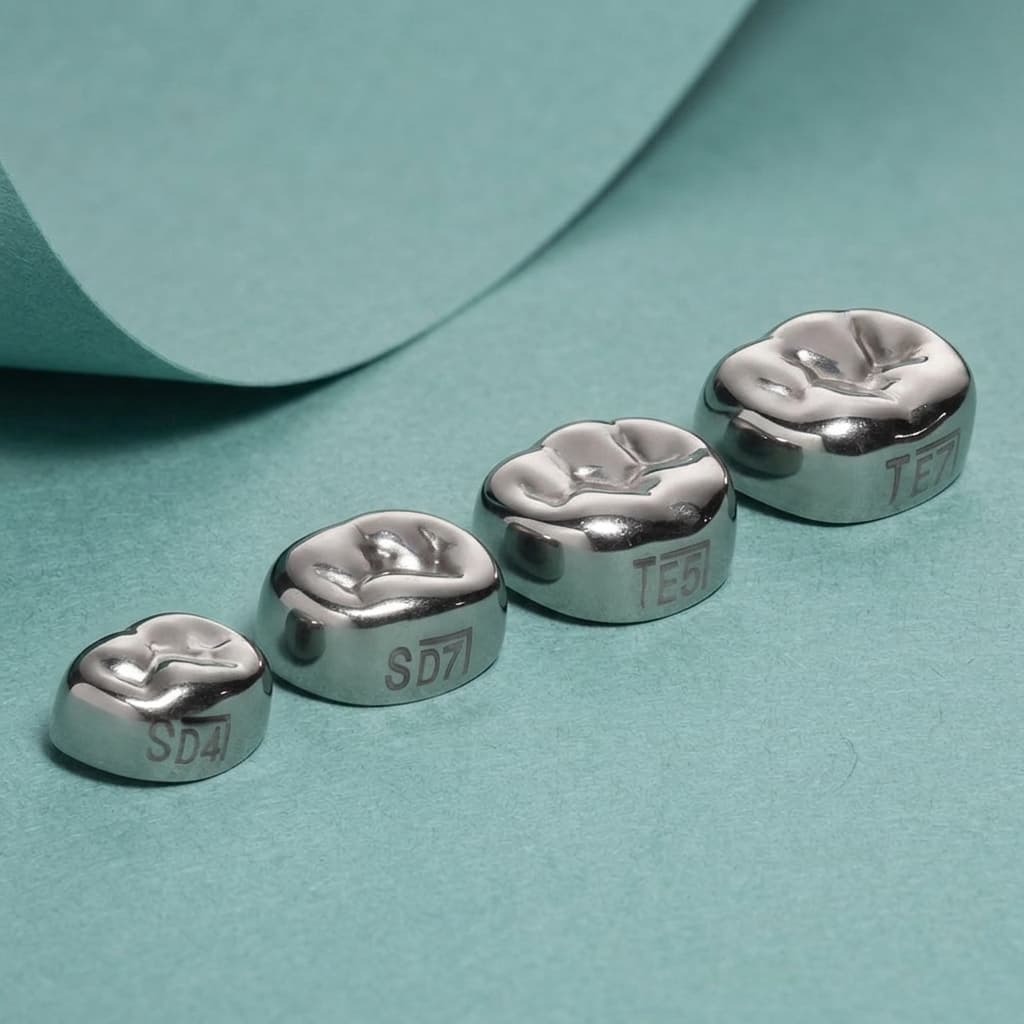
Option two
Silver stainless steel
- Medical-grade 300-series (Type 304) steel, chosen for strength.
- Made for primary molars, the wide baby teeth at the back.
- Shaped to copy natural tooth anatomy, so it fits the space and the bite.
- Arrives pre-trimmed, so it needs very little adjusting at the chair.
- It is silver, not tooth-colored, so it shows when your child opens wide.
Questions parents ask
Will it hurt?
The dentist numbs the tooth first, often with a numbing gel before the injection, so your child should not feel pain while the crown goes on. The lip, cheek, and tongue stay numb for a while afterwards. Until feeling returns, watch that your child does not bite or chew the numb lip or cheek. If a bite does happen, it usually heals on its own. Ask the team how long the numbness should last.
How long will it last?
Baby teeth fall out on a known schedule. The goal is a crown that stays on until the tooth is ready to come out on its own, with no need to replace it. How long that is depends on which tooth it is and your child's age, so ask your dentist. If a crown ever feels loose or comes off, call the office.
How do we take care of it?
Zirconia crowns have a smooth, polished surface that helps stop plaque building up. If the dentist trims a steel crown to fit, the edges are smoothed and polished so it is easier to clean.
Brush twice a day with fluoride toothpaste (a pea-sized amount for ages three to six) and help or watch while your child brushes. Brush right along the gumline around the crown, since plaque there can make the gum sore. Clean between the teeth every day wherever two teeth touch. Limit sugary and starchy snacks and drinks. Call the office if the gum around the crown stays red or sore.
What if my child reacts to metal?
Tell the dental team before the appointment. The steel alloy contains nickel and chromium, and a small number of people are sensitive to these metals. Steel crowns are not used in a child with a known sensitivity. Zirconia is 100% metal-free. If you see any sign of a reaction after placement, call the office and speak with a medical professional.
What about an MRI?
Silver crowns are considered safe in an MRI and are very unlikely to move or heat up. The real issue is picture quality.
- Always tell the MRI technologist that your child has stainless steel crowns.
- For a knee, spine, or abdomen scan, the crowns make no difference at all.
- If repeat head or brain scans are likely, ask whether zirconia is a better choice.